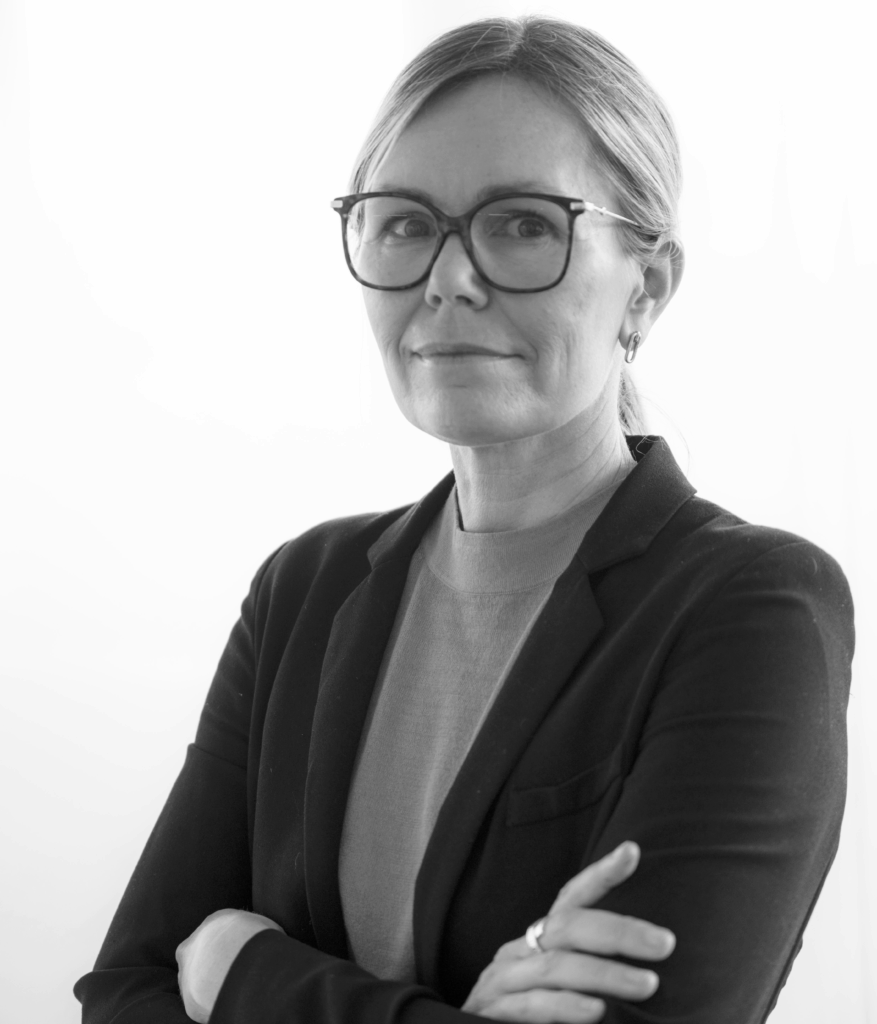
Virginie Troit is Director of the French Red Cross Foundation for Humanitarian and Social Research. A Doctor in International Relations from Sciences Po Paris, she is also a research associate at CERI (Centre de Recherches internationales) and author. In 2025, she was selected for the NGO Leaders program of the Franco-American Fulbright Commission (Columbia University , New York). Her research focuses on humanitarian action, its actors and networks, its standards and knowledge, and its ethical dimension. We asked her to answer three questions about her vision of the crisis currently facing the aid sector.
How is 2025 changing the game for the humanitarian sector?
Virginie Troit: 2025 marks a turning point for international aid, and now, at the beginning of 2026, we can even say that it represents one of the first major shifts in the sector.
The humanitarian system has always experienced crises within crises, key moments that have led to profound questioning, changes in its own organization and standards, and media scandals that have caused mistrust.
Since the 2020s, after a trying global health crisis, the situation has become more difficult for humanitarian organizations. High-intensity conflicts and changing forms of violence, the erosion of international standards, the intensification of disasters due to climate change, societal trends such as polarization, disinformation that erodes social cohesion and trust in institutions, and the privatization of assistance make humanitarian principles more relevant than ever to protect and provide appropriate assistance.
And yet, we are witnessing a double shift: a financial shift that threatens its functioning and an ideological shift that seeks to delegitimize its universal raison d’être.
This affects international NGOs, the International Red Cross and Red Crescent Movement, United Nations agencies—which have launched their forced reform, the humanitarian reset—and, on the front line, national and local actors in the countries most affected by crises. The freezing of US aid in January 2025, amounting to more than $42 billion, came as a shock due to the sudden halt in essential funding, such as that for the AIDS program, PEPFAR. But this shock only confirms a trend toward reduction that began in 2024 among other donors, OECD members. France, Germany, the Netherlands, and the United Kingdom have also announced major cuts. This contraction directly affects humanitarian programs in health, education, and food security. It also destabilizes the long-term infrastructure of the system, which affects even the most independent NGOs, as it was built on cooperation and interdependence. It reveals the impact of a risky yet deliberate concentration of institutional funds, while threatening the international cooperation that is essential for pooling everyone’s efforts.
At the same time, humanitarian demand continues to rise. Migration, forced displacement, wars, large-scale and more frequent disasters, and food crises have forced millions of people onto the road. The ICRC predicts 130 conflicts by the end of 2025, twice as many as 15 years ago. Blatant disregard for international humanitarian law and the Geneva Conventions has cost the lives of many civilians, health professionals, and humanitarian workers over the past three years. We are therefore witnessing a structural imbalance between needs and resources, with the protection of people being undermined. The sector can no longer be content with merely reacting to crises, but must rethink its approach in order to address both threats and needs in order to remain relevant and, above all, profoundly human.
Does this new humanitarian situation threaten or reinforce the role of research and the relationship with the academic sector?
VT: I mentioned the ideological shift. It directly targets the ideas of universalism, diversity, and egalitarianism, but it also targets human rights, ecology, and science, particularly social science research that addresses vulnerabilities.
On the other hand, the trends toward polarization and disinformation that aim to destabilize reasoned deliberation reinforce, and even make indispensable, the role of research in supporting humanitarian actors and preserving at all costs the critical thinking which is essential for informed decision-making. It is at times like these that we really need reliable data, rigorous analysis, reflection, and perspective. The reinvention of the sector, even if forced, and innovation can no longer do without a growing relationship with the academic sector.
Research provides a refined understanding of local contexts and the interplay of international actors. It helps to document unprecedented situations, understand rapidly changing needs, improve the quality of practices in the field, and correct preconceived ideas. In this sense, it enables better targeting of actions by identifying the most vulnerable populations or the most critical needs. Finally, it can stimulate social innovation by supporting the experimentation of new approaches based on the experiences of those on the front lines, whether they are beneficiaries or volunteers.
In this context of a structural crisis in aid, research must no longer be limited to explaining crises after the fact. By producing reliable and contextualized scientific knowledge, it must provide integrated support for fair, appropriate, and legitimate decision-making.
To what extent does humanitarian research contribute to transforming practices in the field, by highlighting their limitations and the innovations needed to make them more effective?
VT: Humanitarian research enables the collection, storage and analysis of scientific data that is essential for ensuring the effectiveness of humanitarian action, in accordance with a specific code of ethics. It produces reliable knowledge and data. This includes food security, health, climate, and the environment. Then, through publications and knowledge transfer, it makes this knowledge available to as many people as possible. By working alongside populations in need, humanitarian research can act as a lever for transformation on several levels. This is very important when declining funding leads to disengagement in the field.
By listening to individuals and societies, the social sciences highlight the limitations of existing practices. Actions that are “effective on paper” may prove to be of little use, for example if targeting is poorly understood or if community tensions exist. Research must also enable innovative solutions to be identified, in particular through dialogue between researchers and practitioners. It must be able to provide evidence to justify particular changes, in the face of practices that are sometimes risk-averse or inflexible due to funding constraints. Finally, through mutual and continuous learning between researchers and practitioners, research becomes participatory and practical in nature. By documenting the dilemmas faced by operational staff, it helps them to express their experiences about different situations and legitimises the choices they are called upon to make.
However, the impact that humanitarian research can have in transforming practices in the field will depend on its ability to be integrated into decision-making processes and co-produced with actors in the field. It will need to be discussed with them and aligned with their real constraints. If these two dynamics are taken into account, it will not only shed light on practices, but will also become a driver of change in a sector in crisis that needs to transform itself. The most appropriate economic model still needs to be found, which is not yet a given, but we are already working on this collectively.
Top photo: © IFRC