In a challenging context marked by difficulties in accessing humanitarian aid, Sudanese refugees in Jordan have developed innovative responses. In her study, Solenn Al Majali, PhD in social anthropology, analyses these initiatives as part of a reflection on refugee empowerment and the localisation of humanitarian aid. She describes a particularly inspiring example of English courses run by the refugees themselves.
Your research refers to the context of discriminatory access to humanitarian aid. Can you tell us more about this?
Solenn Al Majali : I focused mainly on the case of Sudanese refugees in Jordan. They were a double minority in the country. Not only in relation to Jordanians, but also in relation to Syrian refugees, who were much more numerous: around 660,000 registered with the United Nations Refugee Agency (UNHCR), compared to 6,000 Sudanese refugees. For this reason, the UNHCR, and in its wake all humanitarian organisations, had prioritised their actions for Syrian refugees. At the same time, the Jordanian government negotiated economic and trade agreements with the international community in exchange for hosting Syrian refugees on its soil. As a result, the benefits obtained were enjoyed by both the Jordanian population and Syrian refugees. Marginalised among the refugees, invisible to international organisations and discriminated against in their access to humanitarian aid, Sudanese refugees managed to mobilise and set up humanitarian initiatives on their own. It is this journey that I analysed in my research, focusing in particular on the refugees who took the lead in this mobilisation and on one initiative in particular: the implementation of English courses by refugees for refugees.
Explain why and how Sudanese refugees managed to make themselves visible to international institutions.
SAM : Obtaining refugee status from the UNHCR is essential. This is because it determines access to financial aid and the prospect of resettlement in another country, mainly the United States or Canada. Indeed, Jordan only offers temporary shelter without the possibility of working or building a life there.
The situation of Sudanese refugees has led to criticism of aid mechanisms, particularly those of the UNHCR. The feeling of being ignored has prompted them to take action. First, by making themselves visible to the Jordanian government and international institutions. For example, in 2015, there were spontaneous gatherings and a sit-in lasting more than a month in front of the UNHCR offices to demand fair access to their services. This course of action can be explained by the history of Sudanese refugees and their experiences in Darfur. They had already experienced discrimination in their own country, and some had a history of activism. In this new context, they managed to convert the activist skills they had acquired in their country of origin into humanitarian skills.
I conducted interviews with the UNHCR and Sudanese representatives to understand how they were gradually included in aid mechanisms, leading to the creation of a new category known as “non-Syrian refugees”.
What does the conversion of activist skills into humanitarian skills involve?
SAM : The particular situation of Sudanese refugees gave rise to “mutual aid figures” among members of the community. Some refugees had activist experience, gained in particular in student committees at universities in Darfur, where they faced racial discrimination by the central government. This experience served them well in mobilising support and developing links with Jordanian activists. When it came to appointing representatives to the UNHCR, they took on this role. This was a delicate task, as the institutionalisation of representatives can arouse mistrust within the community. The intermediary may be suspected of favouring his or her own personal case to the detriment of the collective. Furthermore, attempts to institutionalise or NGO-ise refugee initiatives are suspected of undermining their autonomy and/or reproducing the hierarchies inherent in the humanitarian system. However, these “mutual aid figures” have helped to set up self-managed initiatives to serve refugees. Examples include the organisation of cultural events and English language courses.
I am referring to the conversion of activist skills into humanitarian skills because political activism is not directly transferable. It is more of a change of register: the ability to listen and understand the needs of the community, the ability to organise, connect isolated people, create an informal database… All these skills have been reused.
Why did you focus your research on the specific case of self-directed English courses?
SAM : In a context of marginalisation of some refugees, particularly those from Sudan, Yemen and the Horn of Africa, informal initiatives aimed at meeting basic needs have been developed by the refugees themselves, based on a “by us, for us” approach. In particular, they have offered English lessons to other refugees, which is an asset in preparing for future settlement in an English-speaking country. Through this project, some refugees have reversed their status. From being beneficiaries, they have become helpers and even teachers. Starting in 2021, they have implemented a specific curriculum, with training content that speaks to refugees and addresses their specific needs. This programme is particularly interesting in that it helps to change perceptions. In addition, it highlights the advantages of an initiative that, due to the context, has remained informal and self-managed. The first teachers have been replaced by those who took their courses. These students have in turn become teachers themselves. Ultimately, organising these courses independently has made the initiative more sustainable over time than if it had depended on external aid.
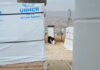
Photo credit @ Gerogiea-Trimspoti-IFRC