How can we ensure that research findings don’t remain confined to reports, but instead become catalysts for action for those working on the ground and decision-makers? This is the very objective of the APRIS method (Post-Research and Social Innovation Workshop) developed by the French Red Cross Foundation, which aims to highlight the link between research and society and to strengthen the Foundation’s role as a conduit for knowledge.
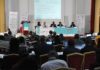
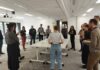
In early March, the Foundation organized another APRIS workshop at the Red Cross Campus, the sixth since the method was launched in 2023. Led by two researchers from the Foundation, Camille Raillon and Louise Baumann, this workshop focused on the French Red Cross’s humanitarian Repair Lab, a mobile initiative that reaches out to people in exile living in precarious conditions to offer them the opportunity to repair their everyday items. The workshop brought together some twenty representatives from the French Red Cross, including those involved in implementing the initiative, leaders of the national migration program, psychologists in charge of the mental health program, and representatives from Croix-Rouge insertion.
This collective intelligence approach has enabled the joint development of four priority roadmaps concerning strengthening volunteers’ technical and mental health support skills, establishing Repair Lab in permanent locations, developing funding and evaluation strategies, and creating indicators of psychosocial impact. These guidelines outline potential directions for the program’s evolution, which will be refined and adapted throughout the year to facilitate its broader rollout.
The Humanitarian Repair Lab: From Experimentation to Scientific Analysis

The Humanitarian Repair Lab, piloted in Montpellier starting in 2023 by the French Red Cross and led by Louise Brosset, is a mobile initiative that reaches out to people in exile living in precarious conditions. It offers a welcoming space dedicated to repairing everyday items, which are often damaged during the migration journey or due to the participants’ difficult living conditions. Beyond providing material assistance, this initiative aims to restore autonomy, encourage initiative, and offer a moment of respite in lives marked by uncertainty.
As part of the French Red Cross’s Migration Plan 2030, a research program supported by the French Red Cross Foundation was launched during the initiative’s design phase to analyze its impacts, particularly as a tool for psychosocial support and inclusion.
A field research project: lessons learned and future directions
Led by Jérémie Grojnowski, who holds a Ph.D. in visual anthropology, this qualitative study is based on video observations and interviews conducted in the field. It explores the Repair Lab as an alternative support space based on “working together.”
The study’s findings reveal a wide variety of ways people participate: some are actively involved, while others observe or participate only occasionally, reflecting a flexible approach tailored to individual vulnerabilities and circumstances. The identified benefits are numerous. Economically, the program promotes reuse and reduces necessary expenses. Socially, it fosters connections and strengthens a sense of belonging. Psychologically, it supports self-esteem and restores people’s ability to function fully.
More broadly, this research calls for a rethinking of traditional forms of social support by incorporating participatory, practical, and non-prescriptive approaches. The Humanitarian Repair Lab thus stands as an innovative initiative that complements the French Red Cross’s existing programs in the areas of inclusion and psychosocial support
Learn more
- Check out anthropologist Jérémie Grojnowski’s research
- Read the interview with Jérémie Grojnowski, the researcher
- Read the interview with Louise Brosset, the Repair Lab coordinator
Photo Credits: ©Camille Raillon