The Foundation’s Board met in early July to select the projects that will receive research grants from the Foundation. The selected researchers will begin their work in September; the grants are for one year. Learn more about the topics they will be working on.
This year, six fellowships were awarded through several calls for applications. Congratulations to the recipients, and thank you to our partners who help us fund these projects and, in doing so, build programs to prepare for the challenges of tomorrow.
List of Winning Projects
- L’aide aux demandeurs d’asile en Côte d’Ivoire à l’épreuve de la nouvelle donne humanitaire
- Project led by Alex N’GORAN, sociologist and research associate at the UNESCO Chair in Bioethics (CUB) at Alassane Ouattara University in Bouaké (Ivory Coast)
This study offers a detailed and context-specific analysis of the local effects of contemporary shifts in humanitarian governance, using the case of aid to asylum seekers in northern Côte d’Ivoire. Its objective is to analyze the effects of budget cuts on the continuity of humanitarian programs, trade-offs in aid allocation, changes in the roles of humanitarian actors, and the adaptation strategies implemented in response to shrinking resources.
- Perceptions communautaires et systèmes locaux d’anticipation du risque d’inondation au Bénin : articulation entre savoirs endogènes et protocoles d’action précoce
- Project led by Soulé Akinhola ADECHIN, sociologist, agricultural researcher, and socio-economist at the University of Parakou in Benin
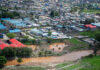
The French Red Cross, the Red Cross and Red Crescent Climate Center, 510—an initiative of the Dutch Red Cross, the Beninese Red Cross, the Togolese Red Cross, and the Guinean Red Cross are collaborating on a project aimed at strengthening mechanisms for anticipating river floods in the Gulf of Guinea. To be effective, such systems (Early Action Protocols) will draw on the findings of this research, which will analyze community perceptions of risks and existing community-based forecasting, warning, and early action mechanisms in the region.
- Building Resilience Together: Local Knowledge and Cyclone Risk Management in the Indian Ocean
- Project led by Hoby Fenitra RABESANDRATRA, anthropologist and postdoctoral researcher at the University of Toulouse Jean Jaurès
Drawing on Cyclone Gezani (2026), which affected the east coast of Madagascar and Réunion, this research will analyze the knowledge and practices of local communities and their interactions with humanitarian systems. It adopts a perspective focused on the co-production of knowledge and the gaps between norms and practices, with the aim of understanding how to integrate institutional mechanisms with local expertise and thereby develop a more appropriate and sustainable approach to risk management.
- Socio-ecological Vulnerability of Agro-Pastoral Communities in Northern Benin to Climate and Security Risks: Social Inequalities and Local Knowledge on Adaptation
- Project led by Gildas Louis DJOHY, geographer and professor at the University of Parakou in Benin
Northern Benin is facing a combined intensification of climate and security risks. In this context, agro-pastoral communities are developing endogenous response and adaptation practices that remain poorly documented and insufficiently integrated into risk management strategies. The objective of this research is to analyze the socio-ecological vulnerability of agro-pastoral communities in northern Benin to climate and security risks, in order to identify social inequalities and highlight local adaptation knowledge.
- Volunteer Practices and Organization in Nursing Homes and in the Community
- Project led by Jordan PINEL, geographer and faculty researcher at Cergy Paris University, winner of the Bénévo’Lab call for proposals
The objective of this research is to provide a better understanding of the practices and challenges surrounding volunteer work in nursing homes in France, particularly within the context of the Red Cross. The research will inform the French Red Cross’s deliberations regarding its strategy for organizing, supporting, and developing volunteerism within its facilities.
- Building a sense of community among volunteers and staff at the French Red Cross
- Project led by Evangeline MASSON-DIEZ, sociologist and professor at Sciences Po Paris and the University of Paris-Est Créteil
This research aims to contribute to the analysis of the relationships between employees and volunteers in the nonprofit sector by studying the dynamics that have emerged within the French Red Cross since the implementation of community committees. The study will use the “Pôle Solidarités Bretagne” as a case study, which has fostered synergies and mobilized volunteers and staff to carry out coordinated initiatives providing daily support to vulnerable populations.
Top photo: KRCS