On 5 November, the French Red Cross Foundation organised the 5th edition of its annual conference at Panthéon-Sorbonne University, in partnership with its school of political science. Let’s take a look back at this enriching event, which brought together humanitarian and social aid practitioners and researchers in the humanities to discuss crucial issues in the sector, combining humanitarian transition, volunteering and climate change.
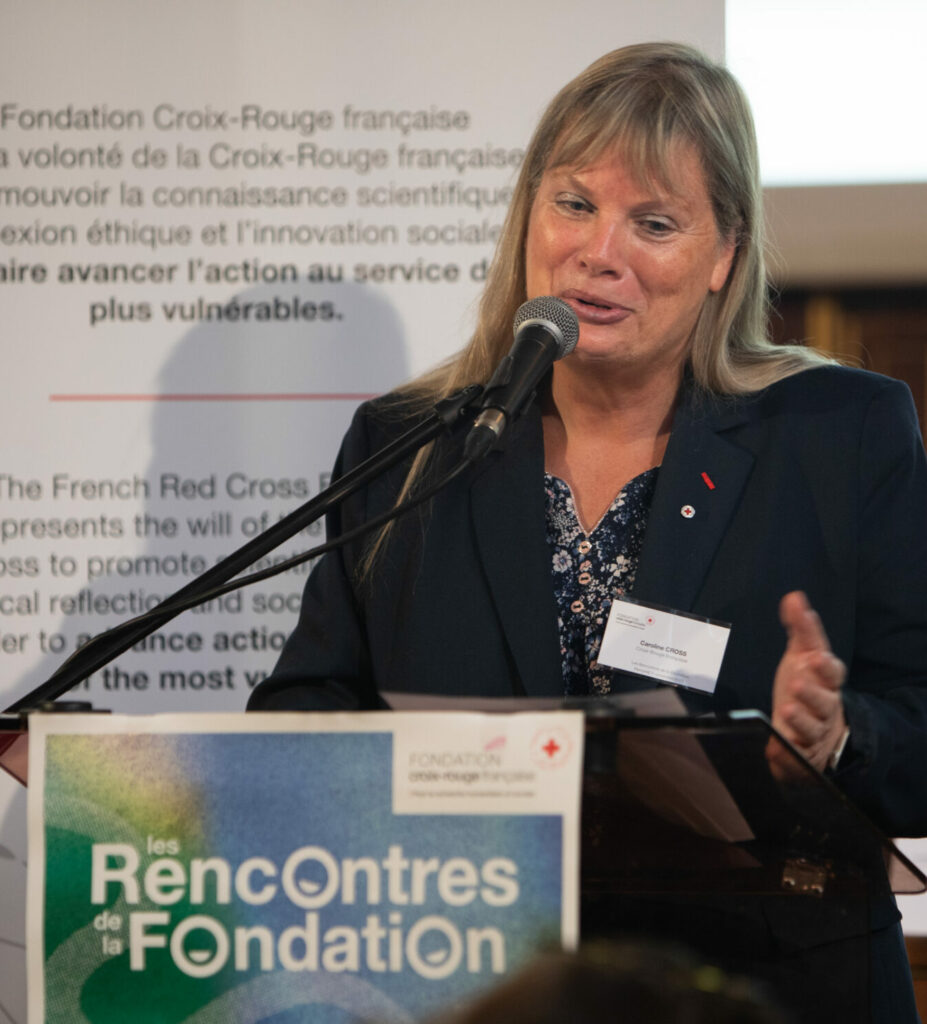
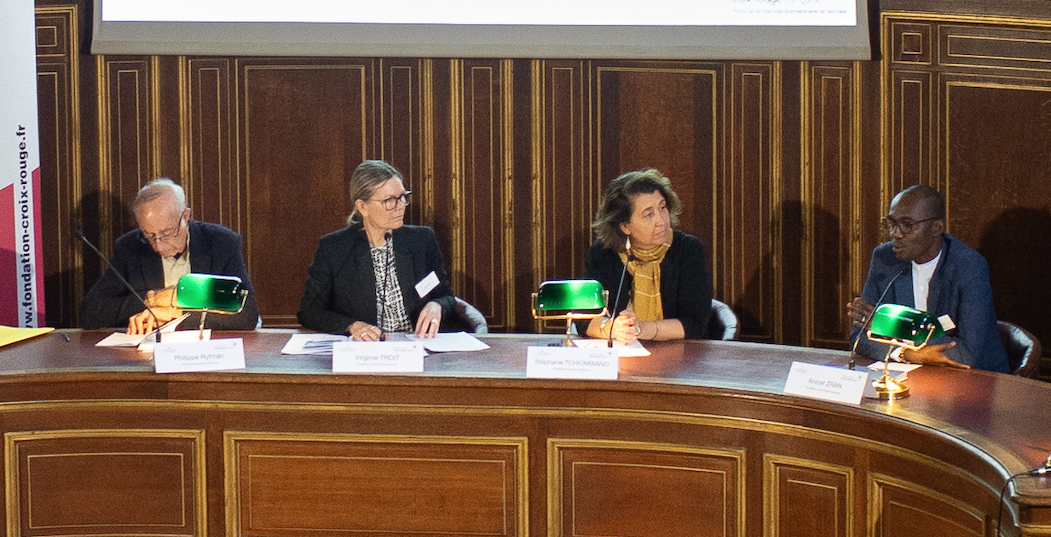
Dr Caroline Cross, President of the French Red Cross, and Stéphanie Tchiombiano, Senior Lecturer at the Sorbonne, opened the event organised by the French Red Cross Foundation in partnership with the Sorbonne School of Political Science.
Caroline Cross, President of the French Red Cross and the French Red Cross Foundation
The agenda required addressing the alarming global humanitarian situation, as highlighted by Virginie Troit, Executive Director of the Foundation. Together with Stéphanie Tchiombiano, they reiterated the importance of strengthening cooperation in light of the end of USAID and the global decline in official development assistance expected by 2025. Philippe Ryfman, professor at the Sorbonne, added that this trend also affects subsidies for the voluntary and humanitarian sector in Europe, where resources are dwindling while needs are increasing as societies become more precarious. The African continent is also affected, particularly by budget cuts, as highlighted by Anicet Zran, senior lecturer at Alassane Ouattara University in Bouaké, Côte d’Ivoire. This development calls into question the international aid model and is pushing African humanitarian organisations to rethink their financial independence.
Theme 1: Obstacles and prospects for local humanitarian action
Moderated by Monique Beerli, senior lecturer at the Global Studies Institute in Geneva, this first round table brought together Jean Émile Mba, political scientist at the University of Maroua in Cameroon, who presented his research, emphasising the importance of talking about humanitarian transition rather than localisation in order to better understand the transformations in the sector. Henri Leblanc, Deputy Director General of ALIMA, supported this idea, reminding participants that we must not limit ourselves to the dynamics of localisation in an interconnected world. Léopold Ngueuta Nouffeussie, a political scientist at the University of Maroua, echoed this sentiment in his analysis of NGO networks in Cameroon and the Lake Chad region. Finally, Annette Msabeni, Head of Organisational Transformation at the International Federation of Red Cross and Red Crescent Societies (IFRC), illustrated this evolution with the example of the Kenyan Red Cross, which has become a key player in the localisation of aid, as well as a major regional and international actor.
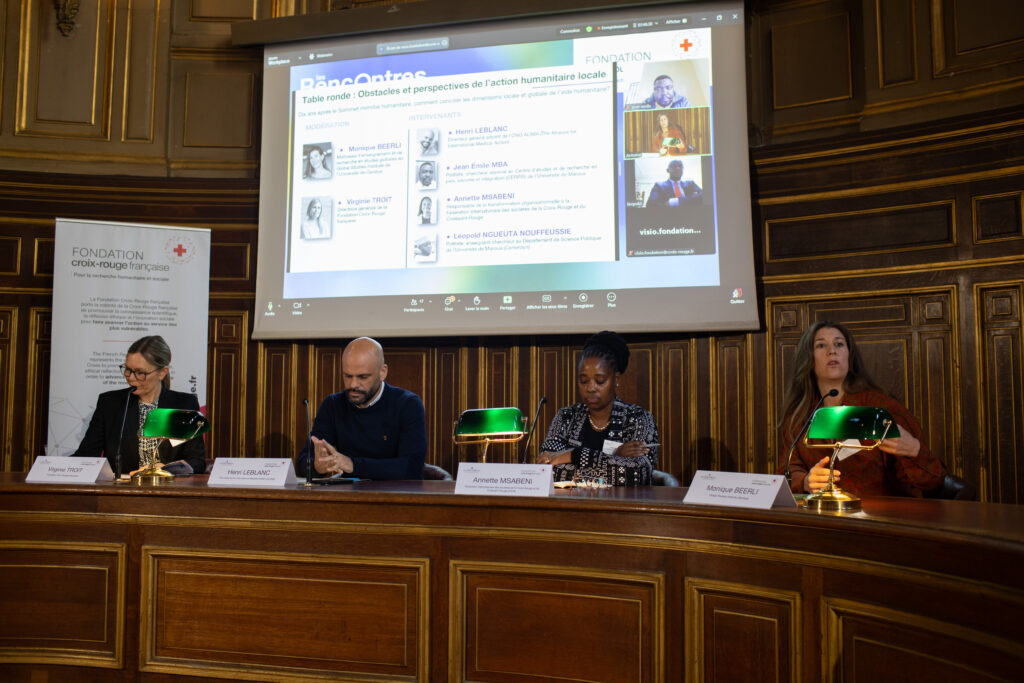
From left to right, Virginie Troit, Henri Leblanc, Annette Msabeni, Monique Beerli
Theme 2: Volunteering in transition
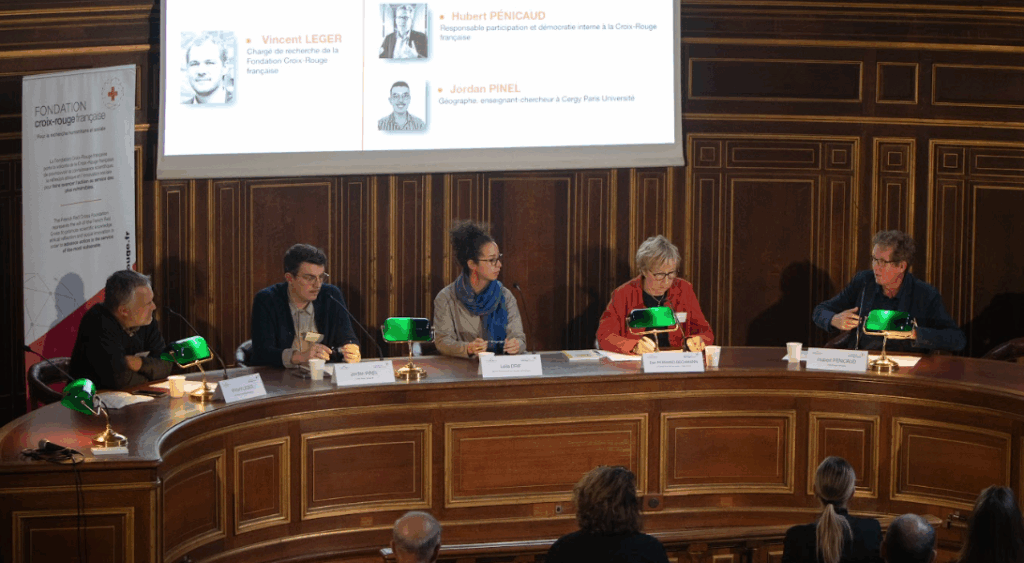
While volunteering remains central to the lives of millions of French people, the round table questioned its role: crutch, auxiliary or substitute for the state? Moderated by Dan Ferrand Bechmann, professor emeritus at Paris 8 University, the discussion addressed the changing nature of volunteering in all its forms in a country with nearly 1.6 million associations, as Hubert Pénicaud, head of internal democracy at the French Red Cross, pointed out. Jordan Pinel, lecturer and researcher at Cergy Paris University, illustrated this dynamism through the reception of Ukrainian exiles in rural areas. These developments also raise questions about the relationship between helpers and those receiving help, particularly when migrant beneficiaries become volunteers, as highlighted by Leila Drif, anthropologist at the Maison des sciences de l’homme du Pacifique.
Theme 3: The health consequences of climate change
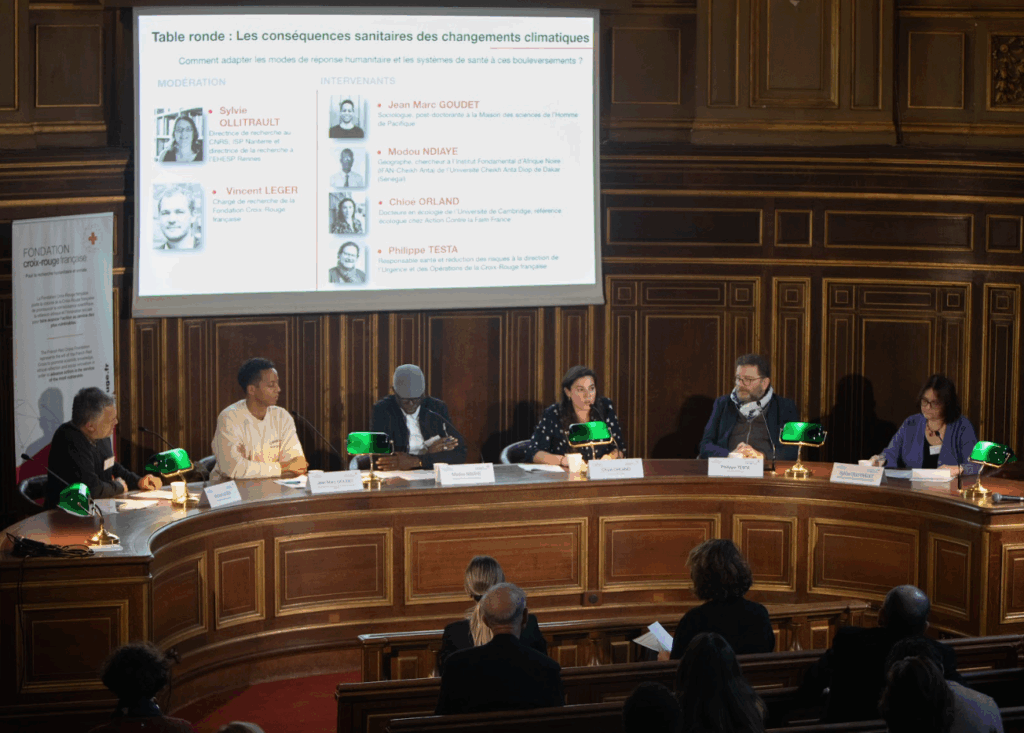
During this round table discussion led by Sylvie Ollitrault, Director of Research at EHESP, Modou Ndiaye, a geographer at Cheikh Anta Diop University in Dakar, emphasised the scientific responsibility towards vulnerable populations, reminding participants that the data collected must truly serve them. Chloé Orland, ecologist at Action Against Hunger, highlighted the chronic nature of climate change and the need for humanitarian organisations to go beyond emergency response in order to build resilience, placing people and their environment at the centre. Jean-Marc Goudet, sociologist and doctor at Inserm, through his research on the effects of extreme heat on the mental health of mothers in Senegal, showed that vulnerable populations have expertise that can guide the approaches to be adopted in the face of extreme climate events, proving that the North has much to learn from the South. In the same vein, Philippe Testa, Head of Health and Risk Management at the French Red Cross, emphasised that the breakdown of health systems and the succession of climate crises are now leading to humanitarian action in France and Europe.
This annual event highlighted the importance of dialogue between science and practice, with the ultimate goal of sustainably improving humanitarian and social responses. It was a great opportunity to strengthen ties between researchers, practitioners and decision-makers in order to tackle the challenges of the modern world together.
2’30 to get a glimpse of the day in pictures
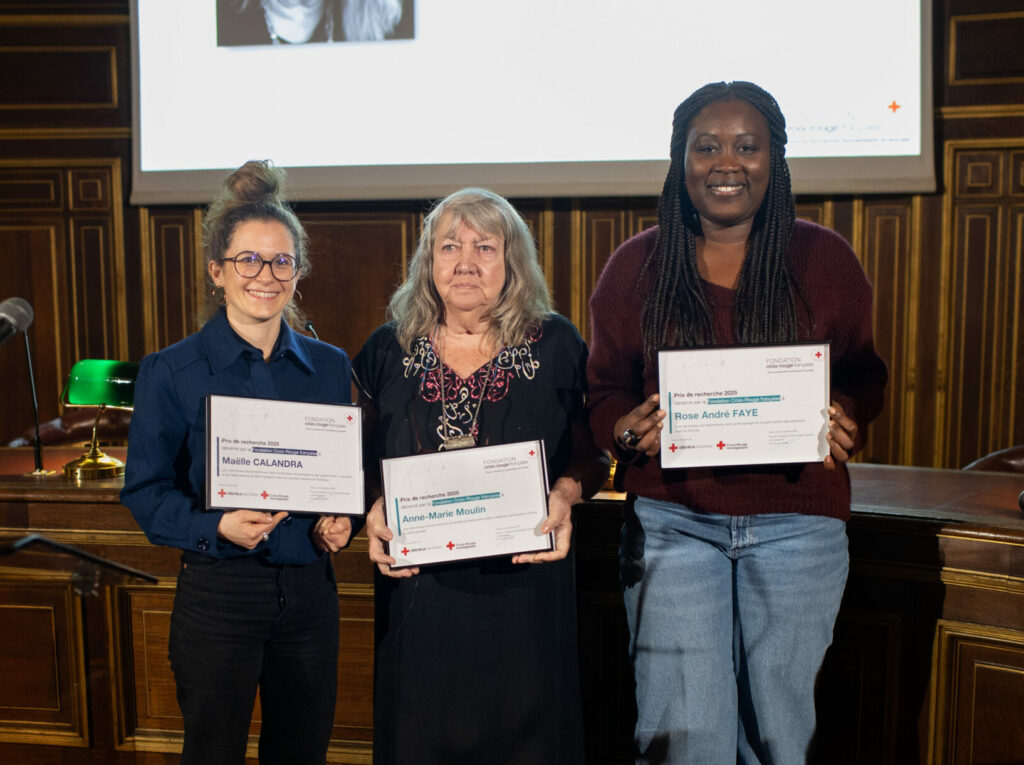
The 2025 Research Awards
At the end of the day, the Foundation presented its 2025 research awards, recognising innovative and promising projects or careers in the humanitarian and social fields.
The Foundation awarded three research prizes to Maëlle Calandra, Rose André Faye and Anne Marie Moulin for their brilliant and innovative academic careers.
Photos : ©B. Blondel pour la Fondation Croix-Rouge française