The French Red Cross Foundation dedicated the 11th edition of its “Pause-Culture-Recherche” event to investigations in sensitive research fields. Before an attentive audience, Political Scientifsts Christelle Calmels and Aghiad Ghanem shared their experiences working within political and military institutions and in conflict zones, during the presentation of the collective work to which they contributed, entitled Investigating in sensitive areas: Risks and methodological challenges in international studies.
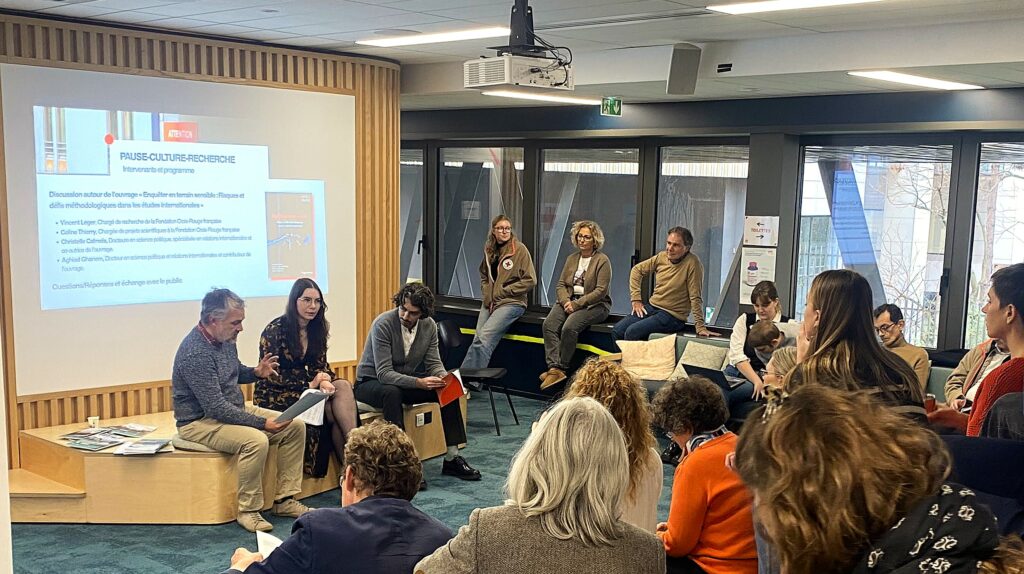
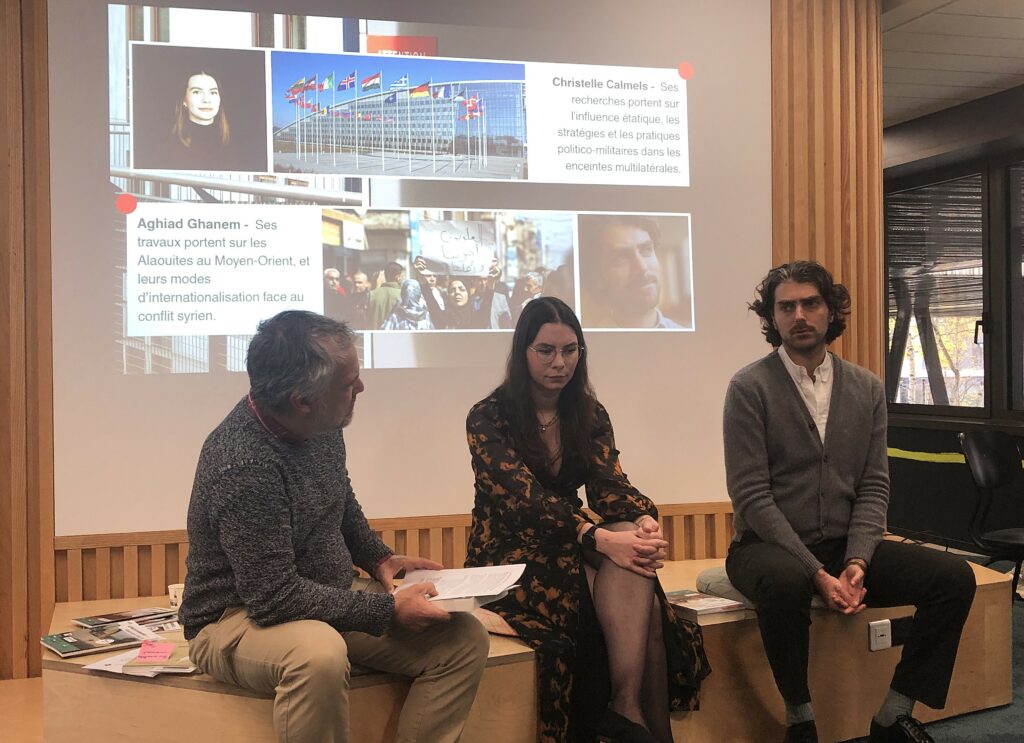
With an increasing number of fields are closing their doors to social scientists and humanitarian workers alike, this Pause-Culture-Recherche aimed to create a dialogue between these two professions, which face similar challenges. Through a reflective approach to their respective investigations in sensitive areas, Christelle Calmels and Aghiad Ghanem provided valuable insights into current issues. Both emphasized the importance of transparency, ethics, and openness in conducting research in difficult contexts: Christelle in representing France at NATO, and Aghiad within the Alawite community in Syria. Whether dealing with authoritarian states, areas of violent conflict, or institutions that are difficult to access, they insisted on the need to reflect on one’s stance and positionality in order to engage effectively in the field.
Aghiad Ghanem highlighted the central role of empathy in research and in maintaining interpersonal relationships in the field. He noted that neutrality and objectivity are difficult to maintain and undesirable when conducting research in one’s own country, as was the case for him as a Syrian Alawite. He also mentioned the loneliness of researchers, who are often left to their own devices, in contrast to humanitarian workers who operate under the protection of an institution. Christelle Calmels explained that her integration into France’s representation at NATO was carried out with complete transparency and that she applied exceptional methodological rigor in order to protect herself and guarantee the reliability of her results. She also pointed out that, in her case, her gender and age had been assets: her status as a young woman allowed her to adopt the posture of a “little girl,” as paternalism encouraged people to open up.
Through these different perspectives, this 11th Pause-Culture-Recherche event highlighted the challenges of access and integration in sensitive fields, in a global context marked by closure and mistrust. Researchers and humanitarian workers have much to learn from each other in order to better understand these sensitive fields and better negotiate their position in the field.
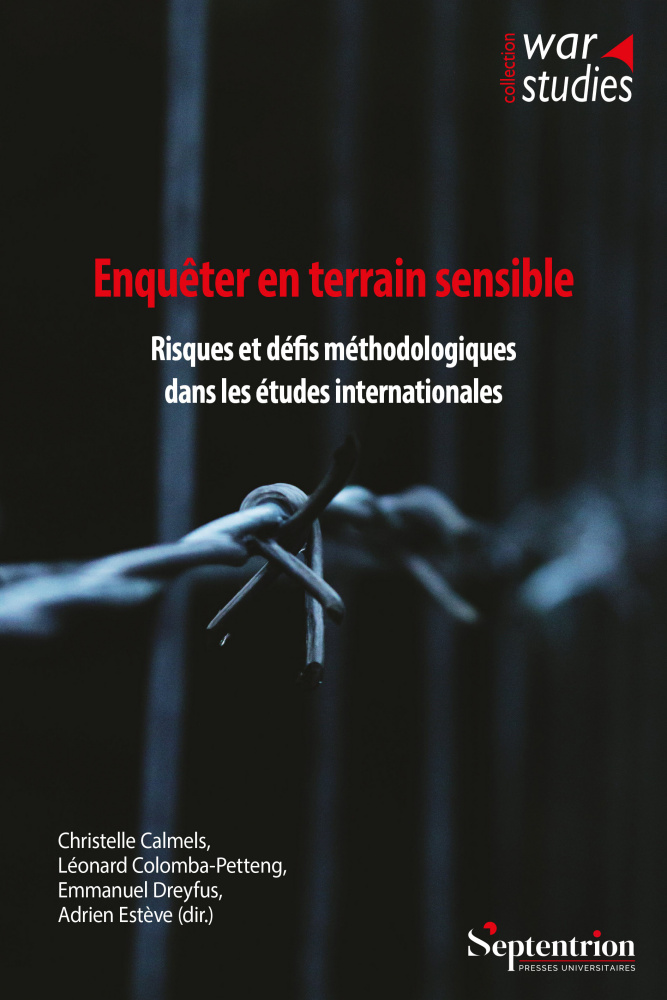
—> More information about the book (in French only) “Enquêter en terrain sensible : Risques et défis méthodologiques dans les études internationales.“
Below you will find previous editions of our Pause-Culture-Recherche:
- Septembre 2025 – “Bande dessinée, le 9e art au service de l’action humanitaire” avec Kek, Nicolas Wild et Catherine Monnot-Berranger
- Juillet 2025 – “Les relations entre le secteur universitaire et les organisations humanitaires : une perspective américaine” avec Virginie Troit
- Mars 2025 – “J’étais du Bataillon des enfants perdus” avec Boris Martin