How can we ensure that research findings don’t remain confined to reports, but instead become catalysts for action for those working on the ground and decision-makers? This is the very purpose of the APRIS (Post-Research and Social Innovation Workshop) method developed by the French Red Cross Foundation, which aims to highlight the link between research and society and to strengthen the Foundation’s role as a conduit for knowledge.
On June 23 and 24, the Foundation organized another APRIS workshop in Yaoundé, at the headquarters of the Cameroonian Red Cross. This workshop, organized in partnership with the French Red Cross and the Cameroonian Red Cross, focused on local health practices and community resilience in the face of flooding in the Far North region of Cameroon. It brought together 24 participants: university researchers, officials from the Cameroonian and French Red Cross, as well as executives from public institutions and NGOs specializing in disaster management, climate, civil protection, and food security.
This collective intelligence approach made it possible to jointly develop three priority roadmaps: the implementation of inclusive community-based communication for flood risk prevention; the creation of a catalog of local knowledge intended to serve as a reference tool for humanitarian planning; and a climate alliance bringing together institutional actors, communities, and the academic world. These guidelines will be refined and adapted by stakeholders in the coming months, with the Foundation providing follow-up support.

Recurring Floods, a Region Under Strain
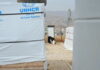
The Far North Region of Cameroon, located in the Sahelian zone, is prone to recurring floods from the Logone River and Lake Maga, with an average return period of five years. Between 2012 and 2024, the region recorded 168 deaths, more than 1.1 million people affected, and more than 653,000 homes destroyed, with the departments of Logone-et-Chari and Mayo Danai among the most vulnerable. These disasters are accompanied by a seasonal shift in health risks, which primarily affect children, the elderly, and groups dependent on natural resources.

Led by Markus Bakaira, who holds a Ph.D. in environmental geography and is a faculty member and researcher at the University of Ngaoundéré, and funded by the S Foundation, this research documents the indigenous knowledge mobilized by communities in the face of flood risks: traditional medicine, local water management, early-warning systems based on observations of nature, preventive land-use practices, and community solidarity mechanisms.
Field Research: Lessons Learned and Future Directions

This knowledge, however rich it may be, exists within a context of increasing vulnerability and remains insufficiently integrated into the institutional risk management mechanisms led by the Cameroonian Red Cross, such as the Early Action Protocol ( PAP). The APRIS workshop facilitated this dialogue between researchers and field practitioners, with the aim of collectively identifying ways to better recognize and integrate these practices into existing programs.
More broadly, this research calls for a rethinking of disaster prevention and response strategies, drawing on a detailed understanding of local environmental dynamics and proven mechanisms of solidarity within communities, in order to develop responses that are more sustainable, inclusive, and tailored to the socio-ecological realities of the Far North Region of Cameroon.