“Truth, trust and humanitarian action in the age of harmful information ”
Wednesday 10 June 2026, from 3 pm to 5 pm (French time, UTC + 2 hours)
Zoom webinar – Registration is required to receive the link
The webinar will be held in French. Thank you for your understanding.
Every six months, the Foundation organises a webinar, “L’Instant recherche”. We invite experts committed to the cause to take part in a free-flowing yet rigorous discussion, where the diversity of knowledge, practices and principles opens up new horizons for the Foundation’s thinking and the emergence of innovative models for action.
This 15th edition is a special edition: it marks the launch of the French-language version of the World Disasters Report 2026, the flagship publication of the International Federation of Red Cross and Red Crescent Societies. Published since 1993, this annual report is a global benchmark in the analysis of humanitarian crises.
The 2026 edition, entitled Truth, Trust and Humanitarian Action in the Age of Harmful Information, is dedicated to disinformation. The Foundation has made two contributions: one on the role of the humanities and social sciences in combating disinformation in the context of an epidemic; the other, in partnership with the RC3 Consortium (Red Cross Red Crescent Research Consortium), on the role of research and evidence-based practices in combating harmful information and strengthening trust in the humanitarian sector.
- The report is available here
Theme
Disinformation, misinformation, hate speech: harmful information has become one of the major challenges facing contemporary humanitarian action. The 2026 edition of the World Disasters Report crosses a conceptual threshold by no longer treating this phenomenon as a mere aggravating factor in crises, but as a humanitarian crisis in its own right — with its own dynamics, its own victims, and its own effects on access to aid and the safety of field teams.
This shift in perspective echoes the 2005 edition of the report, which had identified information as a vital resource capable of saving lives, in the aftermath of the 2004 tsunami. Twenty years on, the problem has been turned on its head: it is no longer a lack of information that threatens populations, but its toxic overload.
The 15th edition of Instant-Recherche will bring together Dr Caroline Cross, President of the French Red Cross, Charlotte Lindsey, editor-in-chief and lead author of the 2026 edition of the report, as well as two other experts with complementary perspectives — Dr Anicet Zran, a health historian from Alassane Ouattara University (Ivory Coast), and Philippe Stoll, head of the brand-new Hub for the Red Cross and Red Crescent Movement on harmful information — to explore these issues together and the responses the humanitarian sector can provide.
Programme
- 3.00 pm: Introduction by Virginie Troit, Chief Executive of the French Red Cross Foundation
- 3.10 pm: Start of the panel discussion: “\Truth, trust and humanitarian action in the age of harmful information\”
- 4.15 pm: Q&A with the audience
- 4.55 pm: Conclusions and end
The speakers
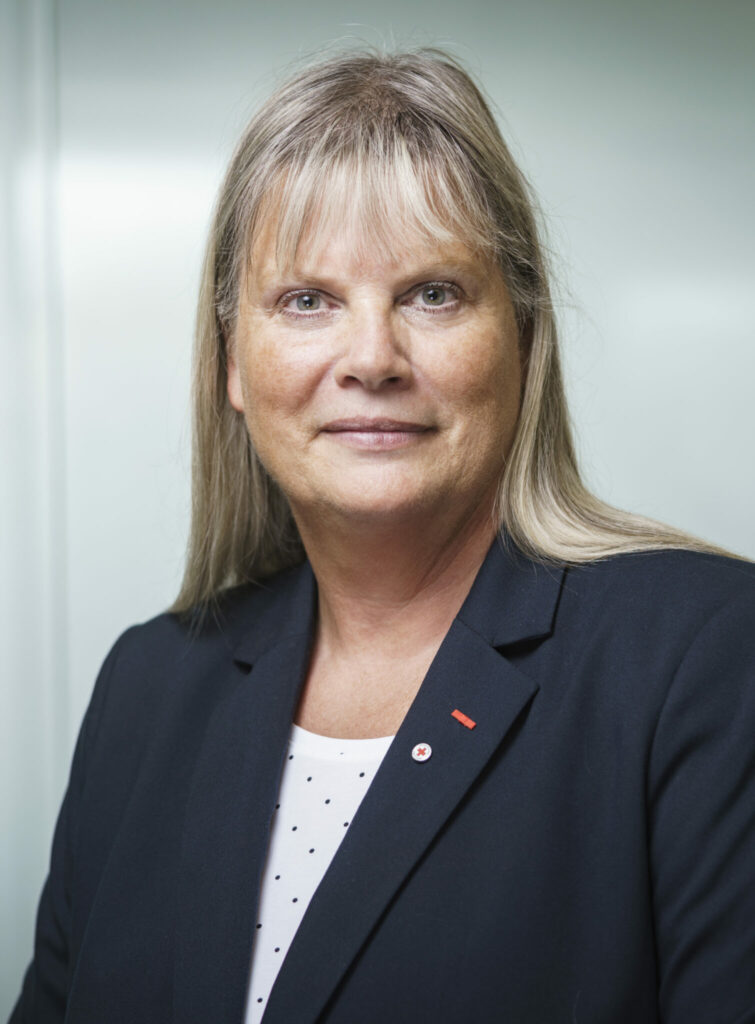
Dr Caroline CROSS is President of the French Red Cross. A general practitioner by training, she began her career in 1992 at Annecy Hospital, before joining the SMUR/SAMU and the air ambulance service. In 2000, she joined the World Health Organisation (WHO) as a doctor, and served from 2013 to 2023 as Director of Staff Health and Wellbeing. Her involvement with the French Red Cross dates back to 1987: starting as a volunteer first-aider in Annecy, she became a trainer, then a national medical instructor and regional doctor, before taking on the role of regional president for Haute-Savoie in 1997. She joined the national board of directors in 2003 and served as national vice-president alongside Professors Jean-François Mattei and then Jean-Jacques Eledjam, thereby gaining a comprehensive understanding of the organisation. She took over as president of the French Red Cross in 2025, succeeding Philippe Da Costa.
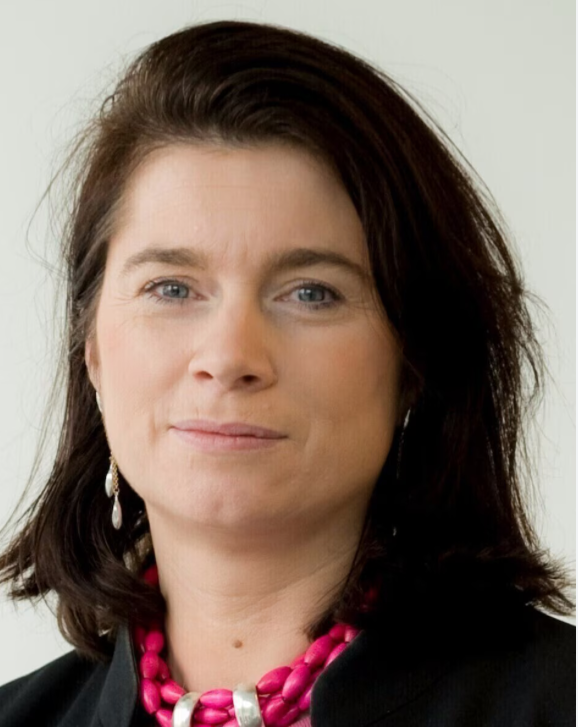
Charlotte LINDSEY-CURTET is the editor-in-chief and lead author of the World Disasters Report 2026. An experienced leader in communications, advocacy and humanitarian strategy, she previously served as Director of Communications and Information Management at the International Committee of the Red Cross (ICRC), a post she held from 2010, overseeing public and institutional communications, information technology, archives management and data protection. During her many years at the ICRC, she also served as Deputy Director of Communications, Head of the Division for Political and Movement Relations, and Project Manager for Women and War, and spent five years working in various field delegations. She is also the author of Women Facing War.
Her publications include:
- « Women Facing War », ICRC, 2001.
- Chapter Data Protection as a Foundational Pillar and Key Enabler of Trusted Digital Transformation in « Data Protection in Humanitarian Action », Routledge, 2025.

Philippe STOLL is the head of the brand-new Hub for the Red Cross and Red Crescent Movement on harmful information, a first for the Movement. Previously, he spent 23 years at the International Committee of the Red Cross (ICRC), where he served notably as Senior Delegate for Techplomacy, working with governments, the academic sector and the technology sector to better protect populations affected by conflict from the impacts of artificial intelligence and cyber warfare. He also managed the ICRC’s strategic and public communications and was posted to Sierra Leone, Israel and the Occupied Palestinian Territories, India, as well as on missions to Afghanistan, Myanmar, Ethiopia and Ukraine. Committed to bringing digital issues to life, he conceived the immersive experience Digital Dilemmas, co-created the installation Deepfake and You presented at the UN headquarters in New York, and is co-author of the ICRC’s AI guidelines.
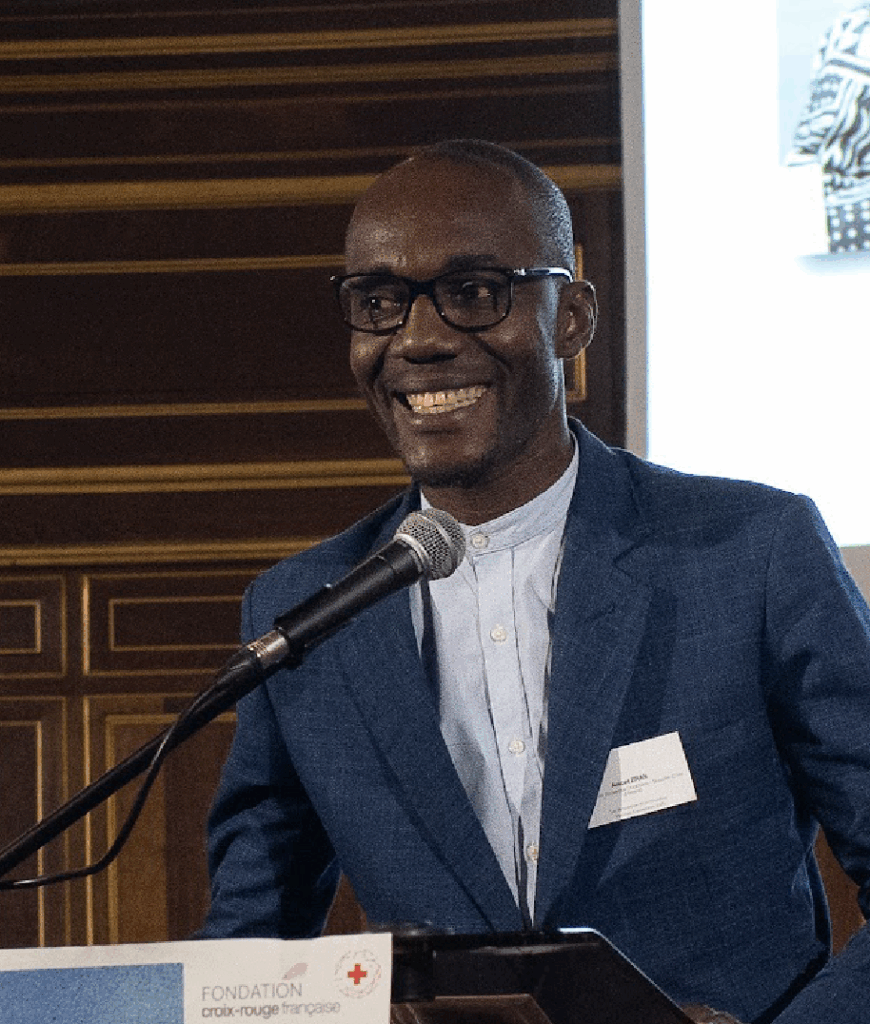
Dr Anicet Zran is a lecturer and researcher in the Department of History at Alassane Ouattara University, holding a PhD in the History of Health. Following a thesis on the history of the HIV/AIDS epidemic in Côte d’Ivoire, he conducted research for the French Red Cross on humanitarian intervention during the Ebola epidemic in Guinea, highlighting the resistance of local populations to the humanitarian programmes deployed. His work focuses on epidemics, representations of disease, conspiracy theories and public health policies in sub-Saharan Africa. Winner of the French Red Cross Foundation’s AXA Research Fund grant in 2017, he has been a member of the Foundation’s Scientific Council since 2025.
Among his publications :
- « Les ONG et la reconstruction du système de santé publique au nord de la Côte d’Ivoire : stratégies de repositionnement et de collaboration », Les Papiers de la Fondation n°20, 2019.
- « ONG locales et reconstruction du système de santé publique au nord de la Côte d’Ivoire », Pratiques & Humanités n°2, 2021.
Moderator
- Virginie Troit, Executive Director of the Foundation
Practical information
- Wednesday 10 June 2026
- Zoom webinar (Registration is required to receive the login link)
- 3pm – 5pm (French time, UTC +2)
- Contact : contact@fondation-croix-rouge.fr
See our previous editions:
- 1re édition « Le regard des sciences sociales sur les épidémies en Afrique » (novembre 2020) ;
- 2e édition « Le regard des sciences sociales sur une action humanitaire locale » (décembre 2020) ;
- 3e édition « Le regard des sciences sociales sur les migrations » (janvier 2021) ;
- 4e édition « Le regard des sciences sociales sur les catastrophes » (mai 2021) ;
- 5e édition « Océan Indien : terre de défis et innovations pour les acteurs humanitaires » (octobre 2021).
- 6e édition « Action humanitaire et accès aux soins : quels nouveaux modèles pour une effectivité du droit à la santé ? » (mai 2022)
- 7e édition « Exils et accueils : l’expérience migratoire au prisme des sciences sociales » (décembre 2022)
- 8e édition « De l’urgence humanitaire à la résilience » (juin 2023)
- 9e édition « Genre et action humanitaire : la place des femmes dans l’humanitaire d’hier à aujourd’hui » (novembre 2023)
- 10e édition « Gestes qui sauvent : réalités, défis et innovations » (mai 2024)
- 11e édition « Urgence et enjeux durables : l’aide alimentaire à réinventer » (octobre 2024)
- 12e édition « Perte d’autonomie : quelles solutions pour les personnes âgées dépendantes ? » (avril 2025)
- 13e édition « Les objets de l’exil » (octobre 2025)
- 14e édition « Santé mentale : le soin à l’épreuve des tabous » (mars 2026)
Photo credit: © IFRC