A look back at the 15th edition — a special edition — of the Foundation’s webinar, ‘Instant Recherche’, which brought together Dr Caroline Cross, Charlotte Lindsey-Curtet, Dr Anicet Zran and Philippe Stoll online on Wednesday 10 June, to mark the launch of the French-language version of the World Disasters Report 2026, to reflect on harmful information as a new humanitarian crisis and the responses the humanitarian sector can provide.
Watch the replay:
A crisis in its own right
Disinformation, misinformation, hate speech: harmful information has become one of the major challenges facing contemporary humanitarian action. The 2026 edition of the World Disasters Report marked a conceptual shift by no longer treating this phenomenon as merely a factor exacerbating crises, but as a humanitarian crisis in its own right, with its own dynamics, its own victims, and its own effects on access to aid and the safety of field teams.
This shift in perspective echoed the 2005 edition of the report, which had identified information as a vital resource capable of saving lives, in the aftermath of the 2004 Indian Ocean tsunami. Twenty years on, the problem has been turned on its head: it is no longer a lack of information that threatens populations, but the harmful effects – whether intentional or unintentional – of an overload of information.
In her introduction, Virginie Troit, Director-General of the French Red Cross Foundation, looked back at the history of this flagship publication of the International Federation of Red Cross and Red Crescent Societies, which began in 1993 as an annual statistical review of disasters before evolving, during the 2010s, into a fully-fledged thematic analysis report. She also presented the two contributions made by the French Red Cross Foundation to this edition: one on the links between rumours, misinformation and epidemics, drawing on more than a decade of field research (Ebola in Guinea, plague in Madagascar, Covid-19 in France, the Comoros and Senegal); the other, submitted on behalf of the Red Cross and Red Crescent Research Consortium (RC3), on the role of research as a tool for anticipation – detecting harmful narratives before they spread, tailoring interventions to local realities, and enhancing organisational transparency – rather than merely as a retrospective tool.
The 15th edition of ‘Instant Recherche’ thus brought together Dr Caroline Cross, President of the French Red Cross, Charlotte Lindsey-Curtet, Editor-in-Chief and lead author of the 2026 edition of the report, as well as two other experts with complementary perspectives – Dr Anicet Zran, a health historian from Alassane Ouattara University (Ivory Coast), and Philippe Stoll, head of the Red Cross and Red Crescent Movement’s brand-new Hub on Harmful Information – to explore these issues together and the responses the humanitarian sector can provide.
The discussion
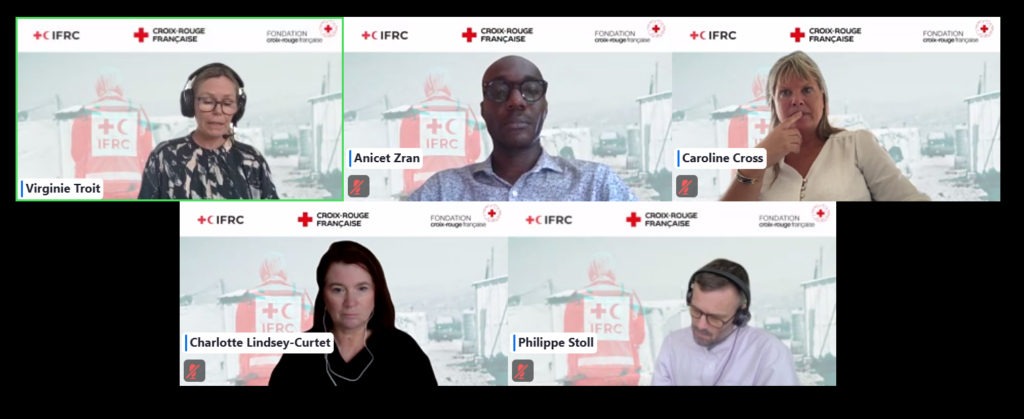
Dr Caroline Cross opened the round-table discussion by citing numerous examples of the impact that harmful information is already having on the ground – rumours of poisoned food in South Sudan, allegations of aid being misappropriated following the floods in Valence, unfounded allegations about Covid-19 in Lebanon, and even a case of confusion with the ICRC in Palestine that led to French Red Cross premises being vandalised with graffiti in France. When asked what had surprised her most whilst gathering contributions for the report, Charlotte Lindsey-Curtet highlighted the recurrence of these same harmful narratives across crises that are, in fact, very different, and the sector’s lack of coordination in the face of campaigns often deliberately designed to undermine trust.
The ensuing discussion sought to understand the origins of these phenomena and how to respond to them. Are rumours about epidemics or disasters really anything new? What, then, has actually changed? And above all: what concrete steps can researchers and humanitarian organisations take to guard against them? These were the key questions that shaped the rest of the debate, addressed in turn through the prism of 1) the history and mechanisms of disinformation; 2) researchers’ methodologies; and finally 3) the institutional responses already being developed.
Dr Anicet Zran explained that rumours in the context of epidemics are nothing new, dating back as far as the Plague of Justinian, and including the seminal work of Allport and Postman on rumours. What has truly changed, in his view, is the scale: the democratisation of social media allows for instantaneous global spread; artificial intelligence facilitates the fabrication of plausible narratives; and conspiracy theories are now being propagated by authority figures themselves. He illustrated this last point with the example of secure burials during the Ebola epidemics, which were met with resistance not because of a lack of understanding of biosecurity but because they clashed with funeral rites that are essential to certain cultures.
A more directly operational question remains: is it possible to establish a causal link between a circulating rumour and dangerous behaviour? Dr Anicet Zran answered in the affirmative, citing the example of chlorine sprayers used during the Ebola outbreak, which were rejected by local communities who associated them with toxic herbicides already known in the area. On this occasion, he outlined his methodology as a social scientist – literature reviews, exploratory interviews, digital monitoring, and the use of archives to understand current forms of resistance, which are sometimes rooted in colonial disputes – arguing for a collaborative approach to developing responses between researchers and practitioners.
On the subject of institutional responses, Philippe Stoll recounted the origins of a new Hub he leads – born out of an incident he experienced in Ukraine in 2022, which he believes highlights the full ambiguity of the subject – and outlined its four-pillar framework: anticipation, detection, assessment and response – with the aim of bringing the issue to the International Conference of the Red Cross and Red Crescent in 2028. Dr Caroline Cross confirmed the French Red Cross’s full support for this initiative, noting that research is a priority of her new term of office. Charlotte Lindsey-Curtet, for her part, summarised the report’s key messages in four recommendations, ranging from the need to treat harmful information as an operational issue to that of strengthening the informational resilience of the communities themselves.
Interaction with the public
The discussion was then followed by questions from the audience, put forward by the Foundation’s research officers, Vincent Léger and Louise Baumann. Can we identify recurring patterns in the way rumours circulate from one crisis to the next? What practical measures can an organisation such as the French Red Cross take to protect itself against them? And how can the fight against disinformation be reconciled with respect for freedom of expression – including in partnerships that NGOs might forge with the media? Dr Anicet Zran answered the first question by comparing HIV/AIDS, Ebola and Covid-19, and by identifying three conspiracy theories that recur systematically. Dr Caroline Cross went on to detail, in response to the second question, the French Red Cross’s monitoring system and crisis units. Finally, Philippe Stoll emphasised the limits the Movement voluntarily imposes on itself, a response supplemented by Charlotte Lindsey-Curtet regarding a distinction she considers essential between freedom of expression and freedom of reach.
Further questions shed light on the very process of compiling the report: how might ‘informational harm’ be better defined to refine responses, and how was the work of gathering contributions carried out? Philippe Stoll cited a classification system established by Stanford University, whilst Charlotte Lindsey-Curtet revealed the scale of the preparatory work: five months, over 200 interviews, and ultimately more than 100 contributions.
The speakers
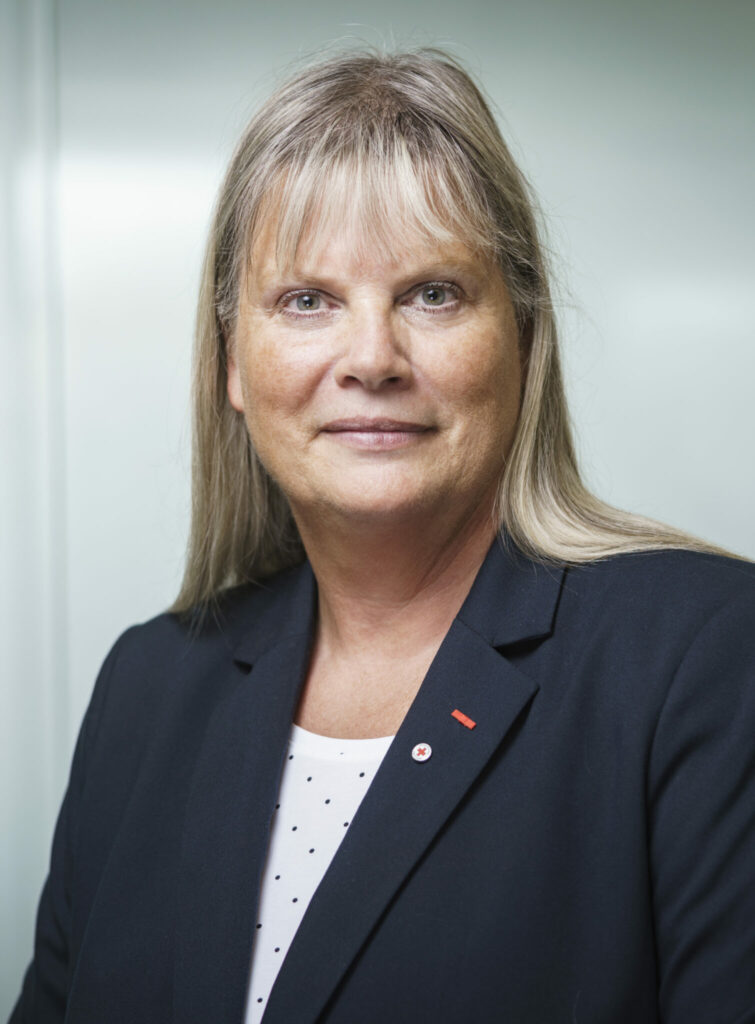
Dr Caroline CROSS is President of the French Red Cross. A general practitioner by training, she began her career in 1992 at Annecy Hospital, before joining the SMUR/SAMU and the helicopter rescue service. In 2000, she joined the World Health Organisation (WHO) as a doctor, and served as Director of Staff Health and Wellbeing from 2013 to 2023. Her involvement with the French Red Cross dates back to 1987: starting out as a volunteer first-aider in Annecy, she went on to become a trainer, then a national medical instructor and a regional doctor, before taking up the post of regional president for Haute-Savoie in 1997. She joined the national board of directors in 2003 and served as national vice-president alongside Professors Jean-François Mattei and then Jean-Jacques Eledjam, thereby gaining a comprehensive understanding of the organisation. She took over as president of the French Red Cross in 2025, succeeding Philippe Da Costa.
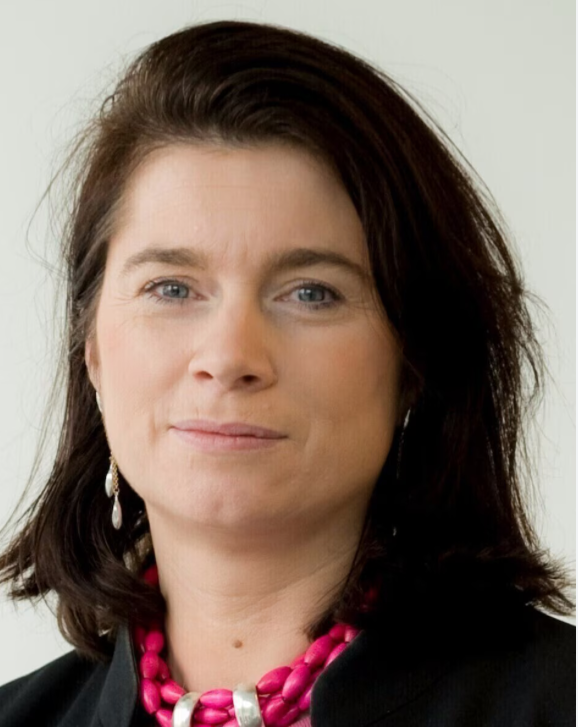
Charlotte LINDSEY-CURTET is the editor-in-chief and lead author of the World Disasters Report 2026. An experienced leader in communications, advocacy and humanitarian strategy, she previously served as Director of Communications and Information Management at the International Committee of the Red Cross (ICRC), a post she held from 2010 onwards, overseeing public and institutional communications, information technology, archives management and data protection. During her many years at the ICRC, she also served as Deputy Director of Communications, Head of the Division for Political Relations and Relations with the Movement, and Project Manager for the Women and War project, and spent five years working in various field delegations. She is also the author of Women Facing War.
Among her publications :
- « Women Facing War », Comité International de la Croix-Rouge, 2001.
- Chapter Data Protection as a Foundational Pillar and Key Enabler of Trusted Digital Transformation in « Data Protection in Humanitarian Action », Routledge, 2025.
Philippe STOLLis the head of the brand-new Hub for the Red Cross and Red Crescent Movement on harmful information, a first for the Movement. Prior to this, he spent 23 years at the International Committee of the Red Cross (ICRC), where his roles included that of Senior Delegate for Techplomacy, working with governments, academia and the technology sector to better protect people affected by conflict from the impacts of artificial intelligence and cyber warfare. He also managed the ICRC’s strategic and public communications and was posted to Sierra Leone, Israel and the Occupied Palestinian Territories, and India, as well as undertaking missions to Afghanistan, Myanmar, Ethiopia and Ukraine. Committed to bringing digital issues to life, he conceived the immersive experience Digital Dilemmas, co-created the installation Deepfake and You, which was exhibited at the UN headquarters in New York, and is co-author of the ICRC’s AI guidelines.
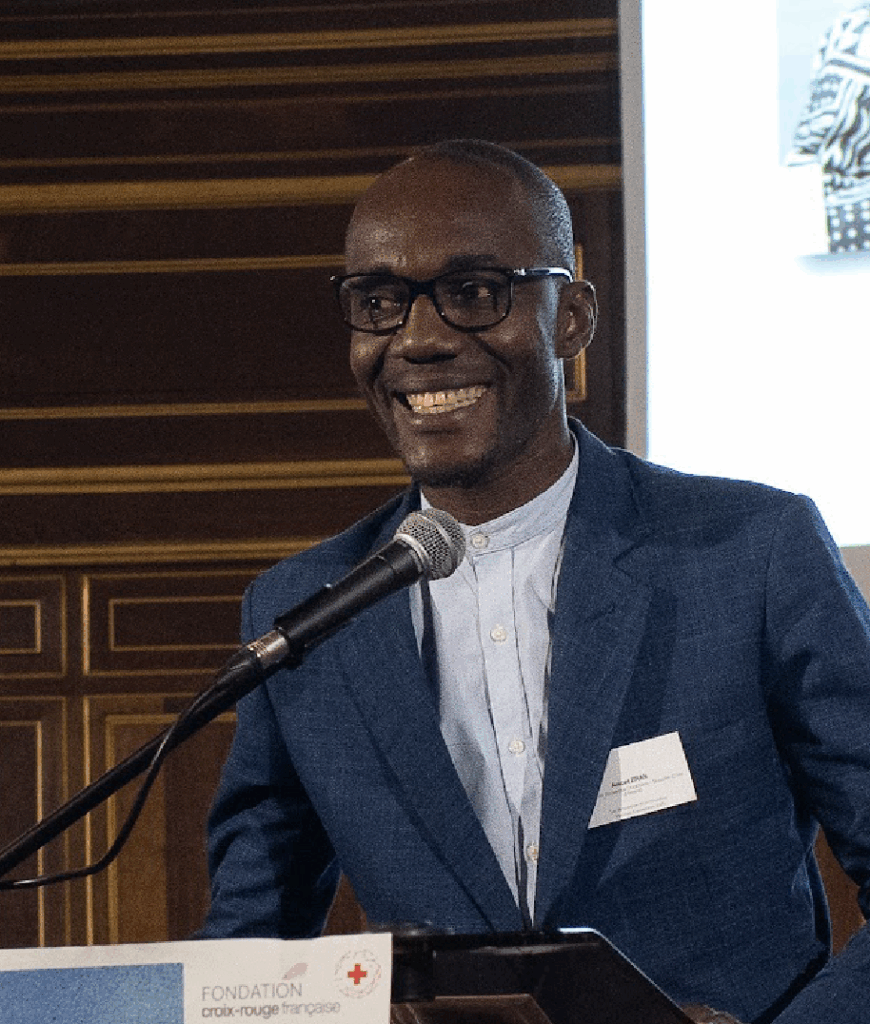
Dr Anicet Zran is a lecturer and researcher in the Department of History at Alassane Ouattara University, and holds a PhD in the History of Health. Following a thesis on the history of the HIV/AIDS epidemic in Côte d’Ivoire, he conducted research for the French Red Cross on humanitarian intervention during the Ebola epidemic in Guinea, highlighting the resistance of local populations to the humanitarian programmes deployed. His work focuses on epidemics, perceptions of disease, conspiracy theories and public health policies in sub-Saharan Africa. A recipient of the AXA Research Fund grant from the French Red Cross Foundation in 2017, he has been a member of the Foundation’s Scientific Council since 2025.
Among his publications :
- « Les ONG et la reconstruction du système de santé publique au nord de la Côte d’Ivoire : stratégies de repositionnement et de collaboration », Les Papiers de la Fondation n°20, 2019.
- « ONG locales et reconstruction du système de santé publique au nord de la Côte d’Ivoire », Pratiques & Humanités n°2, 2021.
Moderator
- Virginie Troit, Chief Executive of the Foundation
View previous editions of L’Instant Recherche
- « Le regard des sciences sociales sur les épidémies en Afrique » (novembre 2020) ;
- « Le regard des sciences sociales sur une action humanitaire locale » (décembre 2020) ;
- « Le regard des sciences sociales sur les migrations » (janvier 2021) ;
- « Le regard des sciences sociales sur les catastrophes » (mai 2021) ;
- « Océan Indien : terre de défis et innovations pour les acteurs humanitaires » (octobre 2021).
- « Action humanitaire et accès aux soins : quels nouveaux modèles pour une effectivité du droit à la santé ? » (mai 2022)
- « Exils et accueils : l’expérience migratoire au prisme des sciences sociales » (décembre 2022)
- « De l’urgence humanitaire à la résilience » (juin 2023)
- « Genre et action humanitaire : la place des femmes dans l’humanitaire d’hier à aujourd’hui » (novembre 2023)
- « Gestes qui sauvent : réalités, défis et innovations » (mai 2024)
- « Urgence et enjeux durables : l’aide alimentaire à réinventer » (octobre 2024)
- « Perte d’autonomie : quelles solutions pour les personnes âgées dépendantes ? » (avril 2025)
- « Les objets de l’exil » (octobre 2025)
- « Santé mentale : le soin à l’épreuve des tabous » (mars 2026)